New: 1-833-691-9150
Used: 1-855-594-7682
Service & Parts: 450-691-9541


Switching to an electric vehicle raises several practical questions. How much range do you need for your daily driving? How does home charging work? Which trim offers the best balance between budget, comfort and equipment? The 2027 Nissan LEAF provides several answers with a lineup that now includes a more accessible S trim alongside the S+, SV+ and Platinum+. This fully electric small SUV therefore lets you choose a configuration suited to your habits rather than automatically paying for the largest battery.
At Solution Nissan in Châteauguay, these considerations are especially relevant. Between trips to Montreal, family errands and outings in Monteregie, needs can vary greatly from one driver to another. The Nissan LEAF is worth discovering for its electric driving experience, flexible cargo space and technologies designed to make everyday life easier.
The arrival of the LEAF S is an important update for 2027. At its Canadian launch, Nissan announces a selling price of $37,966 before taxes and applicable incentives for this version equipped with a 53-kWh battery. This positioning opens the door to drivers who want to reduce their dependence on gasoline while keeping a close eye on purchase cost. Higher trims retain a 75-kWh battery, intended notably for drivers looking for greater range.
The choice is not simply about the advertised price, however. A family that already owns another vehicle, someone who works close to home and a driver who regularly covers long distances do not necessarily have the same priorities. Before choosing, it is useful to consider typical mileage, charging options and the equipment that is genuinely appreciated in everyday use.
To discover the configurations currently available, browse the new Nissan LEAF inventory at Solution Nissan. This makes it easier to compare available vehicles with your actual needs.

The 2027 Nissan LEAF S produces 174 horsepower and 254 lb-ft of torque. The S+, SV+ and Platinum+ trims instead offer 214 horsepower and 261 lb-ft. In both cases, a single electric motor drives the front wheels. The additional output of the larger-battery versions may appeal to drivers who want stronger response during acceleration and highway merging.
The transmission uses a single-speed reduction gear, a common configuration in electric vehicles. The driver therefore does not have to deal with the gear changes of a conventional automatic transmission. Acceleration is continuous, while the quickly available torque helps provide direct response when pressing the accelerator.
In Châteauguay traffic or when approaching the Honore-Mercier Bridge, this smoothness can make daily travel more pleasant. Regenerative braking also recovers part of the energy during deceleration. It contributes to vehicle efficiency without replacing the need to use the brakes when circumstances require it.
The announced range reaches 341 kilometres for the S, 488 kilometres for the S+, 463 kilometres for the SV+ and 417 kilometres for the Platinum+. The S+ is therefore the trim with the greatest announced distance between charges, even though all three higher trims share the same battery capacity.
These differences are a reminder that battery capacity is not the only determining factor. Wheels, tires, weight and vehicle configuration can all influence efficiency. A better-equipped trim may therefore prioritize comfort and presentation while offering a different range.
For someone who drives mainly between Châteauguay, Mercier and Lery, the S trim can meet many everyday needs, particularly with home charging. Drivers who frequently make longer trips may prefer the extra margin provided by the 75-kWh battery versions. In every case, it is important to maintain a reserve suited to weather, speed and charging options at the destination.
This table presents the main differences to help guide your choice.
| Feature | 2027 LEAF S | 2027 LEAF S+ | 2027 LEAF SV+ | 2027 LEAF Platinum+ |
| Powertrain | Electric | Electric | Electric | Electric |
| Driven wheels | Front | Front | Front | Front |
| Transmission | Single-speed | Single-speed | Single-speed | Single-speed |
| Battery | 53 kWh | 75 kWh | 75 kWh | 75 kWh |
| Horsepower | 174 hp | 214 hp | 214 hp | 214 hp |
| Torque | 254 lb-ft | 261 lb-ft | 261 lb-ft | 261 lb-ft |
| Maximum announced range | 341 km | 488 km | 463 km | 417 km |
| Onboard AC charger | 7.2 kW | 11 kW | 11 kW | 11 kW |
| Maximum DC fast-charging power | 105 kW | 150 kW | 150 kW | 150 kW |
| Seating | 5 | 5 | 5 | 5 |
| Cargo area, rear seats up | Approx. 566 L | Approx. 566 L | Approx. 566 L | Approx. 566 L |
| Cargo space, rear seats folded | Approx. 1,572 L | Approx. 1,572 L | Approx. 1,572 L | Approx. 1,572 L |
Range figures are estimates and charging power figures represent maximums. Actual results depend notably on temperature, the charging station and battery condition.
Home charging changes how daily travel is prepared. When a Level 2 charging station is available at home, the vehicle can be plugged in after the day and regain range overnight. The usual goal is to replace the energy used rather than necessarily waiting until the battery is almost empty.
The distinction between onboard chargers is worth noting. The S accepts up to 7.2 kW on AC power, while the other trims have an 11-kW charger. To take advantage of the latter capacity, the home electrical installation and charging station must be able to supply the required power. A more powerful charging station does not force the vehicle to exceed its own limit.
The LEAF has a J1772 port for AC charging and a NACS port for DC fast charging. Nissan announces approximately 35 minutes to charge from 10% to 80% under the conditions specified by the manufacturer. When travelling, it is best to plan stops around compatible and available charging stations while allowing for charging times that vary with conditions.
Because the 2027 LEAF is fully electric, it does not consume gasoline for propulsion. Its efficiency is primarily measured by the amount of electrical energy used over a given distance, generally expressed in kWh/100 km. This measurement makes it possible to estimate travel costs based on the applicable electricity rate.
As a purely illustrative example, energy consumption of 18 kWh/100 km with electricity billed at $0.12/kWh would represent $2.16 in energy per 100 kilometres before charging losses. This is not an official LEAF rating or a guaranteed electricity rate. The same calculation can be adapted to your actual consumption and the price you pay.
For South Shore drivers, the financial benefit therefore depends on mileage, the proportion of home charging and the use of public charging stations. A complete comparison should also include insurance, tires, charging-station installation and financing. Gasoline savings are most meaningful when they are considered as part of the overall vehicle budget.
Cold temperatures affect the range of every electric vehicle. Heating the cabin, keeping the battery at an appropriate temperature and driving on snow-covered roads require additional energy. It is therefore best to assess winter needs with a realistic margin, particularly when regularly travelling long distances.
The 2027 LEAF includes a heat pump, a battery heater and battery thermal management. These features contribute to cold-weather use, but they do not eliminate seasonal variations in range.
A few habits can make the routine easier. When features and conditions allow, preheating the cabin while the vehicle is plugged in helps prepare for departure. Proper tire pressure and progressive driving also support efficiency. For winter trips between Châteauguay and Montreal, suitable winter tires remain essential.

The interior layout emphasizes access to information and ease of use. The lineup notably offers wireless Apple CarPlay and Android Auto, along with connected functions that, depending on equipment and activated services, make it possible to view certain vehicle information remotely. Google built-in is also offered on certain configurations.
The value of these technologies becomes clear when they address a specific habit. Checking the battery level before leaving, preparing the cabin temperature or using navigation can make a busy day easier to organize. Feature availability should nevertheless be verified for the chosen trim, including applicable subscription and connectivity conditions.
Discover the possibilities offered by NissanConnect and the MyNISSAN app. The Solution Nissan team can help you understand compatible services and complete the initial setup.
The LEAF seats five occupants and offers a flexible cargo area. Its liftgate makes luggage easy to access, while the folding rear seat allows the space to be adapted for larger purchases or outing equipment. For a young family, how easily a stroller can be loaded or bags can be stored often matters as much as the published volume.
Available equipment notably includes the Divide-N-Hide cargo organization system, a motion-activated power liftgate, TailorFit upholstery and a dimming panoramic roof. Certain configurations also offer a head-up display and a Bose Personal Plus audio system. Availability depends on the selected trim.
A test drive helps evaluate factors that are difficult to appreciate from a specification sheet. Rear-seat access, driving position, visibility and storage layout are all worth examining with your own use in mind. Bringing your child seat or measuring the equipment you regularly carry can also make the decision easier.

The 2027 Nissan LEAF offers several useful systems, including Blind Spot Warning, Rear Cross Traffic Alert, High Beam Assist and lane-keeping assistance functions. These technologies can support the driver in different situations, from backing out of a parking space to travelling on major roads.
They support driver awareness, while the driver remains responsible for the vehicle. Road-marking visibility, weather conditions and the surrounding environment can affect how they operate. During your visit, a demonstration can help explain their alerts, settings and limitations.
Choosing a LEAF starts with a discussion about your driving. Do you mainly cover short distances? Can you charge at home? Do you prioritize maximum range or certain comfort features? These answers help identify a suitable trim without relying only on the specification sheet.
At Solution Nissan in Châteauguay, you can explore financing and leasing options, review available configurations and book a test drive. To discuss your project and get information applicable to the vehicle you are considering, contact our team.
The S+ has the highest announced range in the lineup. It is particularly well suited to buyers who prioritize distance between charges. The other trims make it possible to choose a different balance between budget, equipment and range.
Its single-speed transmission provides driving without conventional gear changes. The driver simply selects the direction of travel and then uses the accelerator and brakes. All versions presented here drive the front wheels.
Yes, with a compatible installation. A Level 2 charging station is generally a practical solution for recovering range at home. The available electrical power and onboard charger capacity together determine charging speed.
It can meet the needs of many families thanks to its five seats and flexible cargo space. The best way to confirm this is to check child-seat installation, stroller loading and passenger comfort during a visit.
The choice depends primarily on your typical driving distances and access to charging. A larger battery provides a useful reserve for longer trips, while the S trim may suit a more local routine. Your assessment should also take winter driving into account.
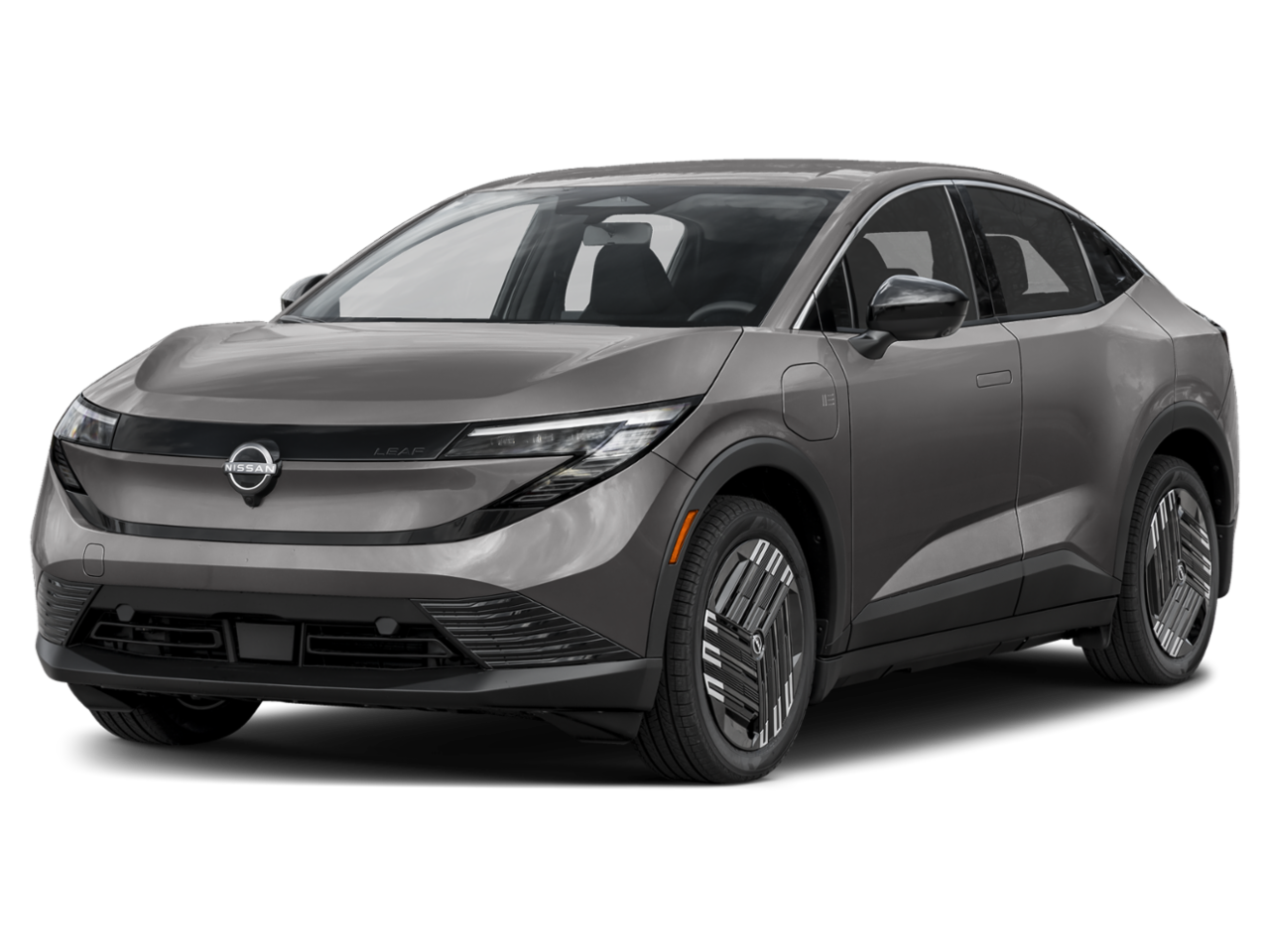
$100
weekly for 60 months at 6.9%
Retail price
$37,940
Includes up to $7,000 EV discount for qualifying customers
* Photo for illustrative purposes only. Certain conditions apply.
$100
weekly for 60 months at 6.9%
Retail price
$37,940
Includes up to $7,000 EV discount for qualifying customers
* Photo for illustrative purposes only. Certain conditions apply.