New: 1-833-691-9150
Used: 1-855-594-7682
Service & Parts: 450-691-9541

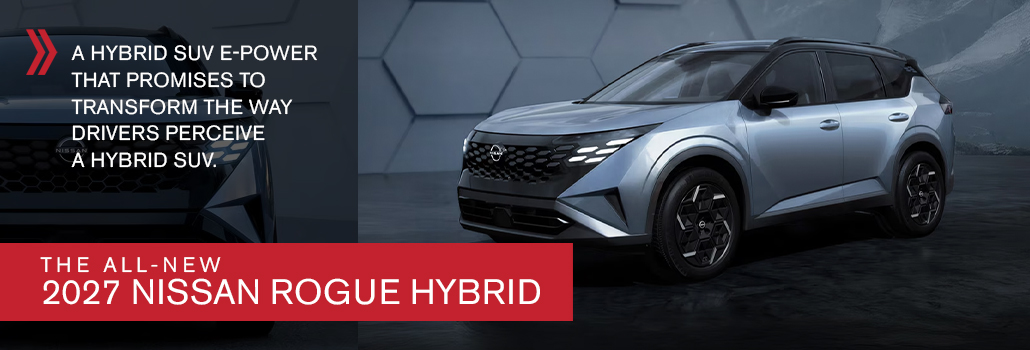
The 2027 Nissan Rogue Hybrid e-POWER promises to transform the way motorists perceive hybrid SUVs. Fully redesigned for the 2027 model year, this fourth-generation Rogue will introduce Nissan’s third-generation e-POWER technology to Canada. Unlike a plug-in hybrid vehicle, it requires no charging station. Unlike many conventional hybrids, its gasoline engine does not directly drive the wheels; they are propelled by electric motors. The result is a smooth, responsive, and quiet driving experience reminiscent of an electric vehicle, with the simplicity of filling up with gas.
For drivers in Châteauguay, Mercier, Léry, Beauharnois, Kahnawake, Sainte-Catherine, Saint-Constant, Delson, Candiac, La Prairie, Brossard, and Salaberry-de-Valleyfield, this formula could be an excellent compromise. It would allow for reduced fuel consumption without changing refueling habits, all while enjoying an electrified driving experience on South Shore streets and highways leading to Montreal.
Nissan plans to offer the 2027 Rogue Hybrid e-POWER in Canada and the United States around the end of 2026. However, the brand has stated that additional information on its design, technology, power, fuel consumption, and Canadian trim levels will be unveiled closer to its launch. Some final technical data is therefore not yet available.
The 2027 Nissan Rogue will not be a simple aesthetic refresh. Nissan Canada officially presents it as an entirely new vehicle and the fourth generation of its popular compact SUV. This new version will also mark the Canadian debut of the third-generation e-POWER technology, already proven in various forms in other international markets.
This evolution comes at a particularly relevant time. Consumers are increasingly looking for vehicles capable of reducing fuel consumption, but many do not yet wish to switch to an all-electric model or install a home charger. The Rogue Hybrid e-POWER addresses this exact reality: it provides fully electric propulsion to the wheels but generates its own electricity on board using a gasoline engine.
The fourth generation is expected to retain the qualities that contributed to the Rogue’s popularity, including a raised driving position, a family-friendly cabin, and versatility. However, Nissan has not yet published Canadian dimensions, cargo volumes, or the detailed model lineup composition. We will have to wait for the official technical specifications before confirming whether this data will be identical to the current Rogue.
To discover the current lineup, you can visit the page dedicated to the Nissan Rogue and contact the Solution Nissan team to follow the arrival of upcoming electrified versions.
The operation of the 2027 Nissan Rogue e-POWER distinguishes it from a traditional hybrid. In a classic parallel hybrid vehicle, the internal combustion engine can drive the wheels alone, with the help of an electric motor, or in combination with it. In the Rogue e-POWER, the wheels are driven exclusively by two electric motors. The gasoline engine serves only to produce the electricity needed to power the battery and traction motors.
This architecture offers several advantages. Since the electric motors transmit their torque directly to the wheels, acceleration can be immediate and progressive. There is no need to wait for a downshift or a mechanical gear change to get a response. Nissan describes a sensation closer to that of an electric vehicle than a conventional gasoline SUV.
The third generation of the e-POWER system uses a 1.5-liter, three-cylinder turbocharged gasoline engine specifically designed for electricity production. The engine, known by the technical designation ZR15DDTe in Nissan’s global communications, can operate in an optimized range because it does not have to follow the variations in wheel speed directly. This targeted use aims to improve efficiency, reduce vibrations, and limit noise.
It remains important not to automatically associate all characteristics published for the European Qashqai equipped with related technology with the Canadian Rogue. The North American version has been developed according to local expectations, and Nissan has not yet confirmed its total power, torque, battery capacity, or the exact calibration of its generator engine.
The 2027 Nissan Rogue Hybrid e-POWER will not use a conventional transmission. As the wheels are driven directly by electric motors, it does not need a multi-speed automatic gearbox or a traditional continuously variable transmission. Nissan emphasizes this feature by presenting the vehicle as a hybrid without a transmission.
For the driver, this means that acceleration should remain fluid, without perceptible interruption caused by gear changes. In traffic between Châteauguay and Montreal, this linear response could make starts, passing, and merging onto Highway 30 feel more natural.
The announced configuration with two electric motors also suggests that the Rogue e-POWER will be offered with a form of electric all-wheel drive. Nissan explains that an e-POWER all-wheel-drive system can use an electric motor on each axle to manage traction for both front and rear wheels. The final equipment for each Canadian version remains to be confirmed.
This electric torque management could be particularly interesting for the Quebec climate. On snowy roads in Mercier, Beauharnois, or Sainte-Catherine, a system capable of quickly adjusting the force sent to each axle can promote more progressive starts and more stable driving. As always, suitable winter tires and prudent driving will remain essential.

The official fuel consumption of the 2027 Nissan Rogue Hybrid e-POWER in Canada has not yet been published by Natural Resources Canada nor confirmed in Nissan’s final technical specification sheet. It would therefore be premature to present a precise value in liters per 100 kilometers as a certified result.
The third generation of e-POWER has nevertheless been designed to improve energy efficiency compared to previous systems. Nissan notably mentions a more efficient generator engine, optimized electricity production management, and a lighter, more rigid five-in-one propulsion unit. This unit combines several essential components of the electric system into a compact package to reduce losses, weight, and noise.
Regenerative braking also contributes to the system’s efficiency. When the driver slows down, the electric motors can recover some of the kinetic energy and return it to the battery. This energy can then be used to propel the vehicle, reducing the number of times the generator engine needs to run.
In urban and suburban trips around Châteauguay, the system could be particularly comfortable. Frequent slowing, stopping, and restarting offer more opportunities to recover energy than highway driving at constant speed. However, actual consumption will always depend on temperature, driving style, speed, tires, terrain, and the load carried.
The Rogue e-POWER should not be confused with a plug-in hybrid. It will not need to be plugged in and will not offer electric range to be recharged at home. Its gasoline engine will automatically produce the required electricity. The owner will therefore fill up at a gas station just like a conventional Rogue, but will enjoy electric propulsion to the wheels.
One of the main objectives of e-POWER technology is to offer the sensation of an electric vehicle without imposing external charging. Since the electric motors are the only ones driving the wheels, torque is available quickly, and acceleration does not depend directly on the gasoline engine’s speed.
Nissan also states that this configuration helps make the cabin quieter than with a conventional internal combustion powertrain. At low and medium speeds, some e-POWER systems can operate momentarily using energy stored in the battery, without continuously running the generator engine. When the engine does start, its operation can be controlled to limit abrupt variations and noise.
For a family in Saint-Constant or Delson that regularly travels to Montreal, this refinement can make commuting periods more pleasant. Operating without gear changes, the immediate response of electric motors, and regenerative braking should create a relaxed daily drive.
Nissan has also confirmed that a one-pedal driving function will be part of the new Rogue e-POWER experience. This technology increases deceleration when the driver lifts off the accelerator, reducing the need to constantly switch between the two pedals in certain conditions. However, the function does not eliminate the need to use the brake pedal to completely immobilize the vehicle when the situation requires.

Nissan has not yet detailed all the screens, connected systems, and driver-assistance features that will be offered in Canada. The brand indicates that complete information on technologies will be released closer to the launch.
Given its status as a fully redesigned vehicle, the 2027 Rogue should benefit from a modernized digital experience. However, it would be imprudent to confirm screen sizes, Google service integration, a specific audio system, or semi-automated driving functions right now without an official announcement specific to the Canadian market.
The e-POWER technology itself already constitutes a significant innovation. Its system constantly monitors electricity production, battery charge level, energy recovery, and the power sent to the motors. The driver does not have to manually select the energy source or manage system charging.
NissanConnect services should also continue to play a role in the ownership experience, particularly for certain remote functions and on-board connectivity. However, the equipment, subscriptions, and compatibility of the 2027 Rogue will be confirmed later. You can learn more about the current ecosystem by visiting the NissanConnect page as well as the MyNISSAN app.
The official cargo capacity of the 2027 Nissan Rogue Hybrid e-POWER has not yet been announced. Nissan has also not confirmed its interior dimensions, volume behind the second row, or the exact configuration of its cargo floor.
The presence of a battery and electrical components can sometimes influence a hybrid vehicle’s layout. Nissan will therefore need to specify how the new e-POWER architecture has been integrated and if it changes the available space compared to the current Rogue. It would not be prudent to assume the volumes of the previous model are already confirmed for the fourth generation.
The Rogue’s purpose, however, remains that of a family-oriented compact SUV. One can reasonably expect a cabin designed for daily errands, shopping, sports activities, and weekend getaways. For families in Châteauguay, Candiac, or La Prairie, the balance between passenger space and cargo room will certainly remain an important criterion when choosing a version.
As soon as Canadian data becomes available, it will be important to pay attention to the volume behind the rear seat, the maximum volume with the seatbacks folded, the presence of an adjustable floor, and storage options under the floor. These features will determine, in particular, how easily the Rogue can accommodate a stroller, luggage, hockey equipment, or the purchases of an active family.
The e-POWER technology seems particularly well-adapted to the driving habits of Montreal’s South Shore. A resident of Mercier might need to drive to Châteauguay, then cross to Montreal for work. A family from Léry might make short trips during the week and take the highway to visit the Laurentians or the Eastern Townships on the weekend.
In these situations, the Rogue e-POWER combines the smoothness of electric propulsion with the freedom to refuel quickly. It does not require installing a home charger, which can be advantageous for renters, condo owners, or drivers who park in a location without easy access to an outlet.
The system could also suit motorists who wish to reduce their fuel consumption without planning their trips around charging. Whether the route leads to Salaberry-de-Valleyfield, Brossard, Montreal, or a more distant destination, the vehicle continues to produce the necessary electricity as it drives.
Winter will naturally be an important test. Electric systems offer quick and precise response, while the gasoline engine eliminates the need to rely on a fast charger during a long trip in cold weather. Fuel consumption may, however, increase when temperatures drop, as is the case with all hybrid and internal combustion vehicles.
Choosing a hybrid vehicle rests on several considerations: fuel economy, road handling, interior space, technology, operating costs, and driving habits. At Solution Nissan in Châteauguay, our team will be able to help you determine if the Rogue e-POWER fits your daily life and to compare its features with those of other Rogue versions.
You can browse vehicles available in our new Nissan vehicle inventory, book a test drive, and discover our financing and leasing options. Drivers who wish to replace their current vehicle can also request an appraisal of their used vehicle.
Availability, trims, pricing, and final features of the 2027 Rogue Hybrid e-POWER will be communicated closer to its scheduled arrival in late 2026. To follow the latest news and get information tailored to your situation, you can contact Solution Nissan.
Yes. Nissan Canada has confirmed that the 2027 Rogue Hybrid e-POWER will be offered in Canada and the United States around the end of 2026. It will introduce the third generation of e-POWER technology to the country.
Yes. Nissan officially presents the 2027 Rogue as an entirely new fourth-generation model. It is therefore not just an update of the current Rogue.
No. The Rogue e-POWER is not a plug-in hybrid. The gasoline engine produces the necessary electricity on board, and the vehicle is refueled at a gas station like a conventional model.
No. In this architecture, the wheels are driven exclusively by two electric motors. The gasoline engine acts as a generator and is not mechanically connected to the wheels.
Nissan has not yet published the official power and torque of the Canadian version. Figures mentioned in some media should therefore not be considered final.
Official Canadian consumption is not yet known. The third generation of e-POWER has been designed to improve fuel efficiency, but we will have to wait for the certified figures for each version before announcing consumption in liters per 100 kilometers.
Nissan has confirmed that the vehicle will be powered by two electric motors, a configuration compatible with an electric all-wheel-drive system. The precise composition of the Canadian lineup and the versions offered, however, have yet to be announced.
Trunk capacity has not yet been published for the new model. As the 2027 Rogue relies on a new generation and a different hybrid architecture, it is best to wait for official dimensions rather than automatically reusing data from the current Rogue.
Nissan expects its arrival in Canada around the end of 2026. The precise date will depend on the launch schedule and deliveries to dealerships. Motorists in Châteauguay and the South Shore can follow its availability with Solution Nissan and book a test drive as soon as the model is accessible.

Offer valid on: Rogue
Lease starting from $99 weekly
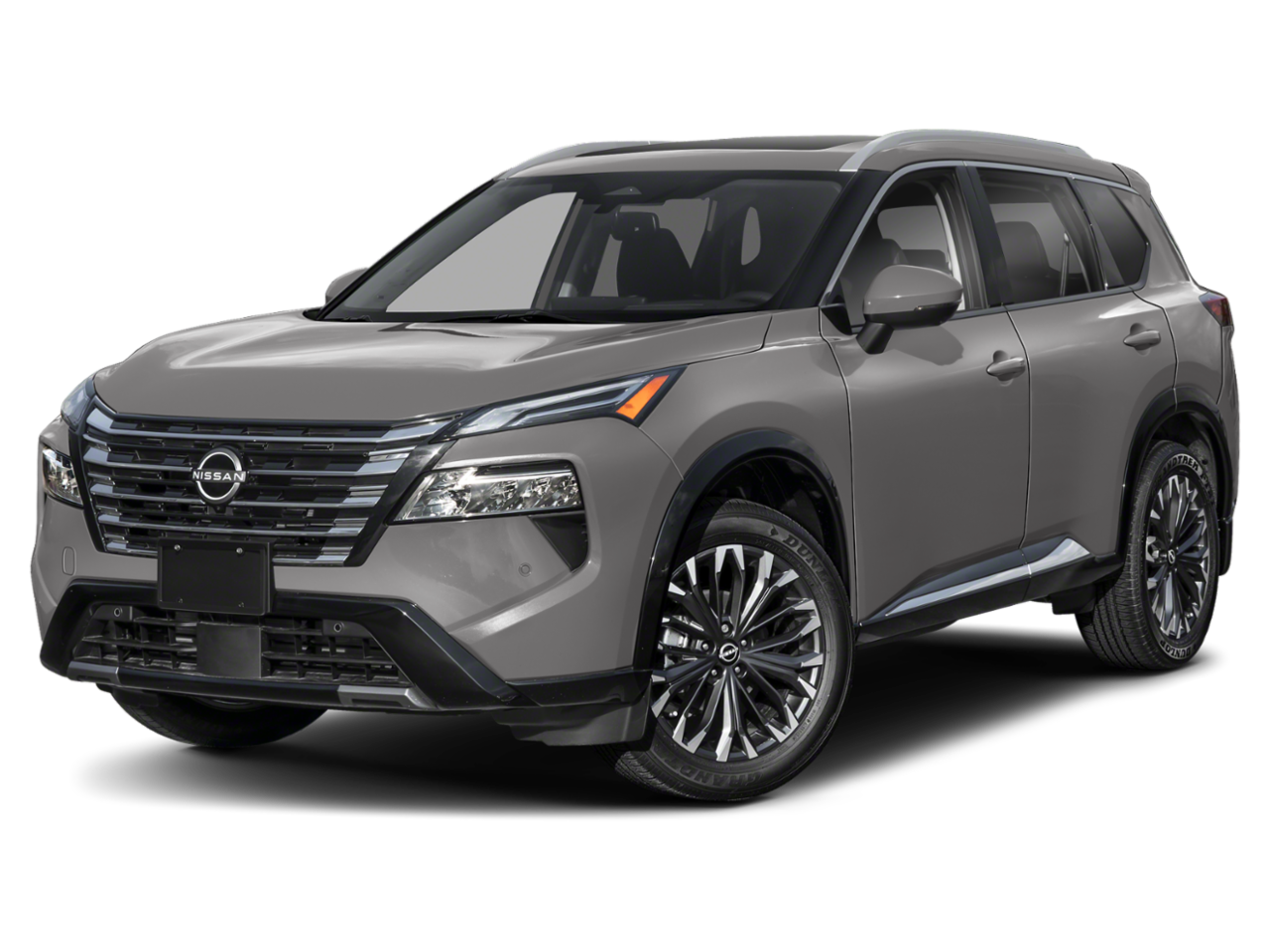
$6,000
in rebates* Photo for illustrative purposes only. Certain conditions apply.
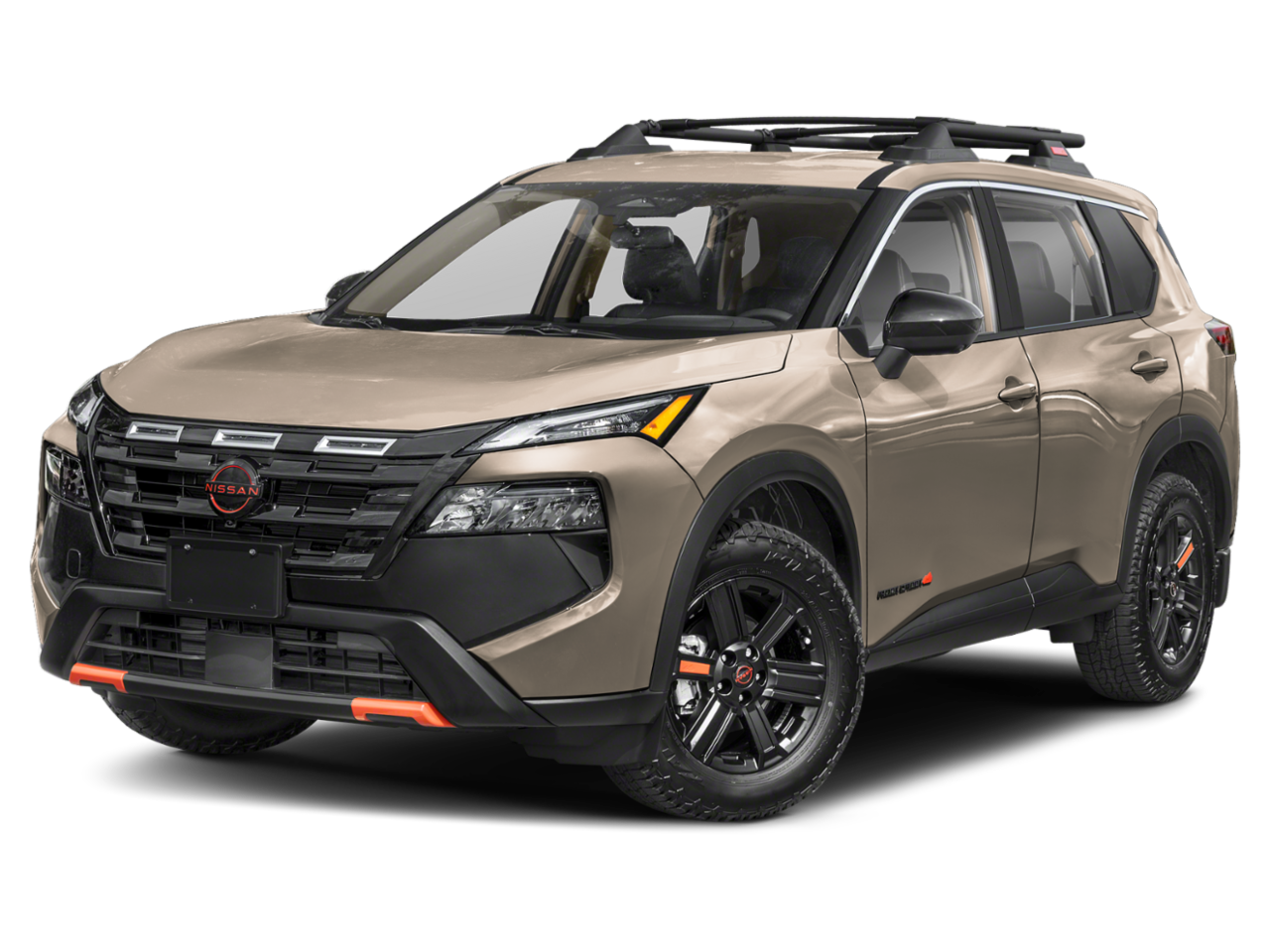
$5,000
in rebates* Photo for illustrative purposes only. Certain conditions apply.
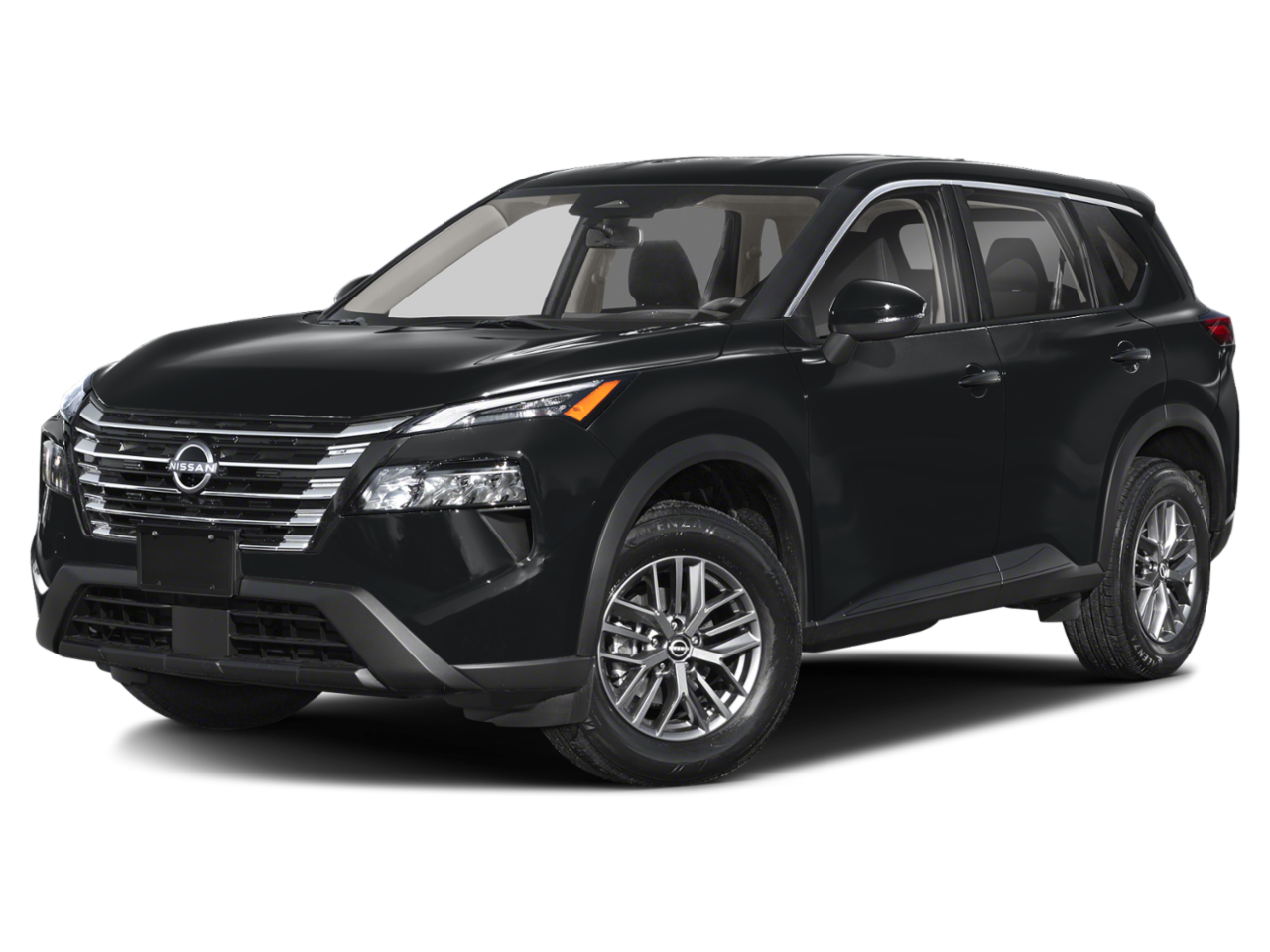
$99
weekly for 36 months at 0%
Retail price
$36,475
$1,200 Nissan Bonus included
* Photo for illustrative purposes only. Certain conditions apply.
Offer valid on: Rogue
Lease starting from $99 weekly
$6,000
in rebates* Photo for illustrative purposes only. Certain conditions apply.
$5,000
in rebates* Photo for illustrative purposes only. Certain conditions apply.
$99
weekly for 36 months at 0%
Retail price
$36,475
$1,200 Nissan Bonus included
* Photo for illustrative purposes only. Certain conditions apply.